{{ q.original }}
{{ q.translation }}
{{ t.navPapers }}
{{ feat.title }}
{{ feat.original }}
{{ feat.caption }}
{{ t.navJourney }}
The Long Way Home
{{ t.bookP }}
{{ t.aboutP1 }}
{{ t.aboutP2 }}
Read the full text
The full text of the archive
Everything on this page is transcribed from a dated document in the Guggenheim family archive. This is the complete text: the quotations, the papers and the route.
Quotations from the letters
Vor allem Mutter war wochenlang total meschugge vor Freude.
Above all, Mother was completely out of her mind with joy, for weeks.
Ich werde auch meine Briefe numerieren, dieser ist No 1.
I will number my letters too. This one is No. 1.
Es geht uns allen gut.
We are all well.
Von Liebe ist überhaupt nicht mehr zu sprechen. Ein nettes Wort oder einen Kuss bekomme überhaupt nicht mehr.
There is no longer any talk of love. I no longer get a kind word, or a kiss.
Wie kann nur ein Mensch so verändern?
How can a person change so completely?
Das Leben ist nun mal total verpfuscht.
Life is now completely botched.
Vielleicht wird man sich einmal erzählen, Paul hat Selbstmord begangen, und bald wird er vergessen sein.
Perhaps one day people will say: Paul took his own life — and soon he will be forgotten.
Ich bedaure noch mehr, dass ich mich je in sie verliebt habe, ja dass ich sie heute noch, trotz allem, noch so innig heiss liebe.
I regret even more that I ever fell in love with her — yes, that I still love her today, despite everything, so ardently.
Nun wünsche ich Euch, dass Ihr recht bald kommen könnt, aber vor allem aus dem Lager heraus könnt.
Now I wish for you that you may come very soon — but above all, that you may get out of the camp.
Ihr könnt Euch vorstellen, wie wir uns freuen würden, wenn Ihr uns schon besuchen würdet.
You can imagine how glad we would be if you were already visiting us.
Was sind Imponderabilien — Liebe?
What are imponderables — love?
Es muss eine Harmonie sein, wenn nur der gute Wille da ist.
There must be harmony, if only the good will is there.
Gegen ein ewiges „Dein Kragen sitzt nicht gut“, „Du bist nicht gut rasiert“ konnte ich nicht — dagegen war ich nicht aufgewachsen.
Against an eternal ‘your collar sits badly’, ‘you are badly shaved’ I had no answer — I was not raised for that.
Wie man so taktlos, brutal und gemein sein kann, verstehe ich nicht. Gott behüte mich vor einer solchen Einstellung.
How one can be so tactless, brutal and mean I do not understand. God preserve me from such an attitude.
Es ist eine bodenlose Frechheit, mir das Recht auf das von mir verdiente Geld abzusprechen.
It is a bottomless impudence to deny me the right to the money I earned myself.
Es war einmal. Nein, 10 — 100 — 200 Mal ein Tag, der begann so…
Once upon a time. No — ten, a hundred, two hundred times: a day that began like this…
Es ist eine wahre Kunst, sich zu merken, wen man noch, schon, nicht mehr und wieder zu grüssen hatte.
It is a true art to remember whom one still, already, no longer, and again had to greet.
Gitterstäbe stehen Spalier, wenn die Vierhundert das lang verheissene und viel gelobte Land abziehen.
The iron bars stand in honour as the four hundred depart for the long-promised, much-praised land.
Es ist vielleicht ein göttlicher Zufall, dass mir hier ein kleines süsses Mädel über den Flur gelaufen kam.
It is perhaps a divine accident that a sweet little girl came running past me in the corridor here.
Ich bin mir so weit klar, und glaube sagen zu müssen, dass wir beide schuld daran haben. Sie unwillig und ich schwach.
I am clear enough, and believe I must say that we are both at fault. She unwilling, and I weak.
die völlige Vernichtung grosser jüdischer Gemeinden, ein in seinen Ausmassen unvorstellbarer Massenmord.
the complete annihilation of great Jewish communities — a mass murder unimaginable in its scale.
Als diese Dinge einige Wochen zuvor in den Zeitungen erschienen, wollte und konnte man es kaum glauben, und nun wurde Wort für Wort bestätigt.
When these things appeared in the newspapers weeks before, one hardly wanted — or was able — to believe it. Now it has been confirmed, word for word.
Ahí van mis labios para que los bese muchas veces.
There go my lips, so that you may kiss them many times.
Zittend in het gras wil ik je even bedanken voor je brief.
Sitting here in the grass, I want to thank you for your letter.
We zijn op oefening en heb ik sedert een week geen dak boven mijn hoofd gehad. Overigens niet ongezellig.
We are on exercise, and I have not had a roof over my head for a week. Not unpleasant, all the same.
Maak het naar omstandigheden goed. De omstandigheden ook niet te beroerd.
I am well, considering the circumstances. And the circumstances are not too wretched either.
Jammer dat de studie je zwaar valt en je slaap tekort komt… ik ben ervan overtuigd dat je eroverheen komt.
A pity the studying weighs on you and you are short of sleep… I am convinced you will come through it.
De oorlogsberichten vooral uit Rusland blijven gelukkig prima, wat ook op mijn stemming een goede invloed heeft.
The war news, from Russia especially, stays good — which has a good effect on my mood as well.
Jammer, dat je request niet het gewenschte resultaat heeft gehad. Ik was er wel bang voor.
A pity your request did not get the result you wanted. I was afraid of that.
Het komt best in orde zoodra je weer in Nederland bent. En dan is het altijd goed, dat je ook in Engeland moeite hebt gedaan voor je naturalisatie.
It will come right as soon as you are back in the Netherlands. And it is always good that you made the effort in England too, for your naturalisation.
Houdt je maar taai, ouwe jongen.
Keep tough, old boy.
verzoekt eerbiedig te worden genaturaliseerd tot Nederlander.
respectfully requests to be naturalised as a Dutchman.
Sollte mein Sohn Paul bedrängt sein, so bitte ich, ihn zu bevorzugen.
Should my son Paul be in hardship, I ask that he be favoured.
The papers
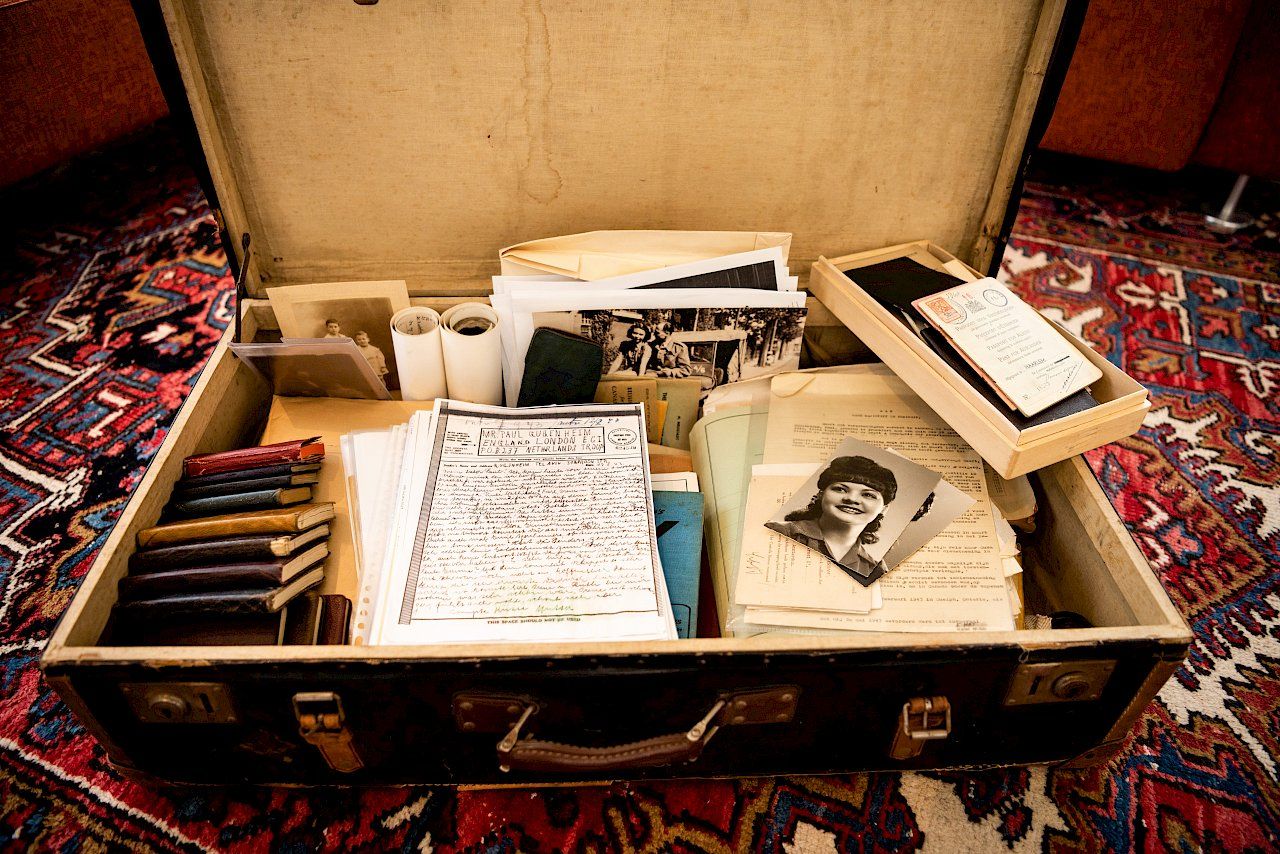
The suitcase
Where the archive was found
The case itself, opened: airgraphs, typed letters, passports and photographs, kept together for eighty years. Everything on this page came out of it.
Source: Guggenheim family archive, the suitcase
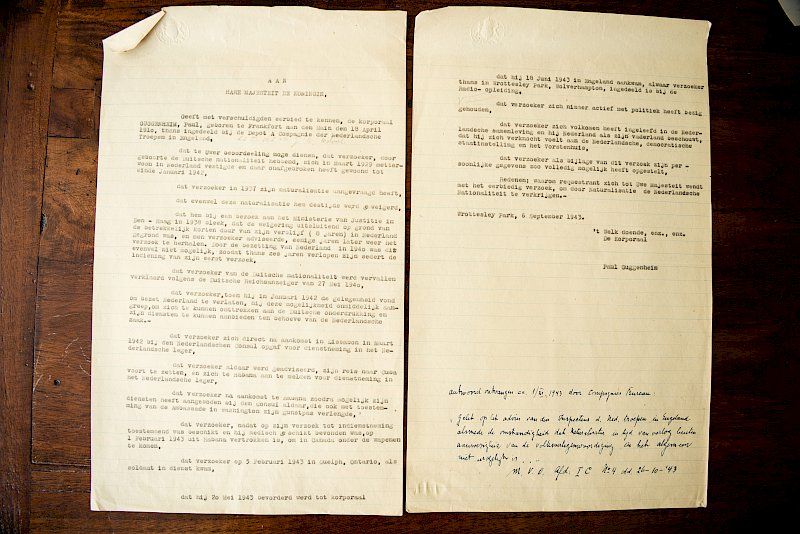
Petition to the Queen
Wrottesley Park, 6 September 1943
„Aan Hare Majesteit de Koningin … verzoekt eerbiedig te worden genaturaliseerd tot Nederlander.“
The first of two petitions. Two typed pages setting out his whole case — born Frankfurt 1910, in the Netherlands since 1929, stripped of German nationality in 1940, enlisted in Canada — and asking to be made Dutch. A pencilled note records the ministry’s reply of 26 October 1943.
Source: Guggenheim family archive, the suitcase
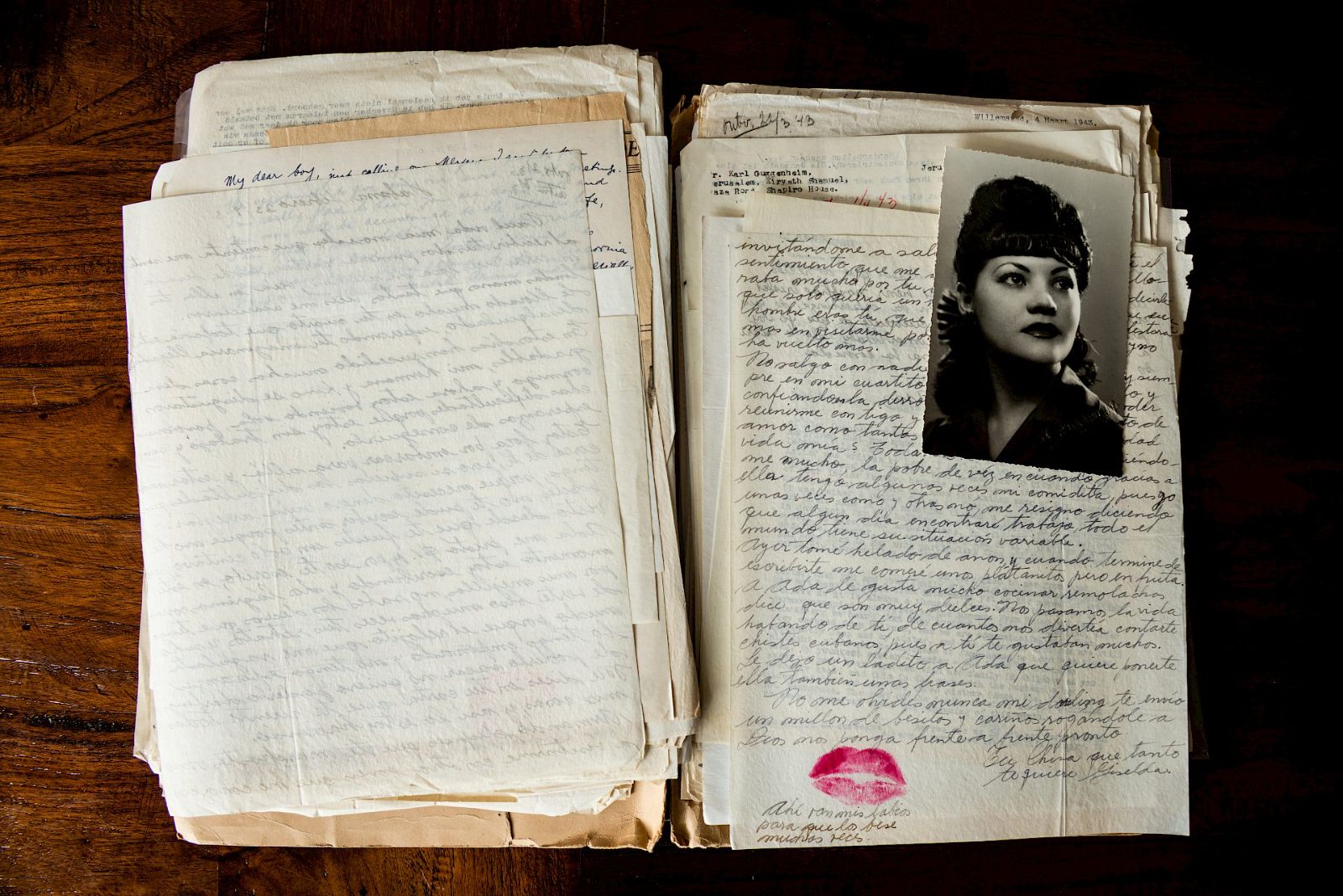
Giselda’s letter
Havana, 1943
“Ahí van mis labios para que los bese muchas veces.”
Giselda’s letter from Havana, signed “Tu China que tanto te quiere” — her photograph laid on the page, a lipstick kiss pressed at the foot.
Source: Guggenheim family archive, the suitcase
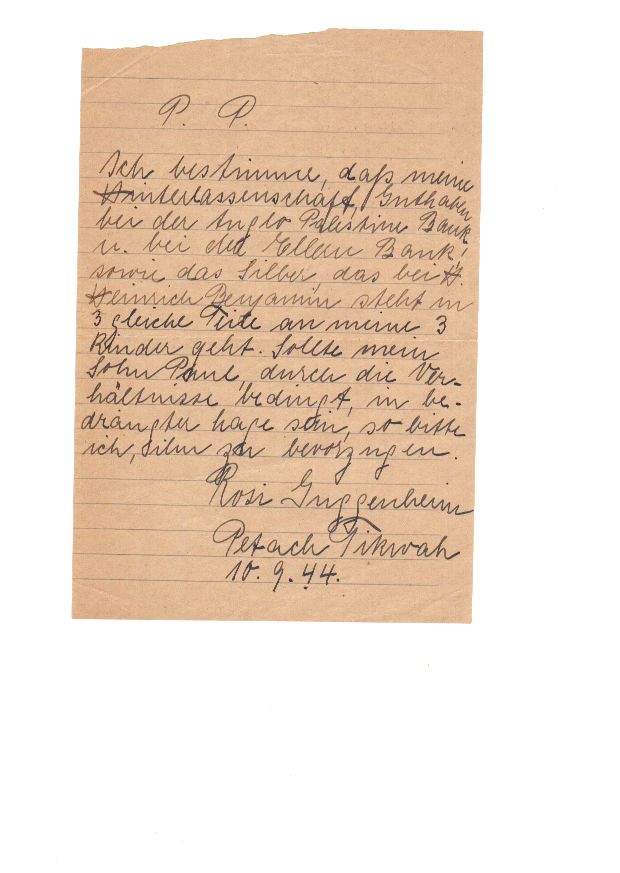
A mother’s note
Petach Tikvah, 10 Sept 1944
„Sollte mein Sohn Paul bedrängt sein, so bitte ich, ihn zu bevorzugen.“
His mother’s will, in pencil: her savings at the Anglo-Palestine Bank and her silver to be shared equally between her three children, with one exception. When she died in 1946, Paul asked his brother not to honour it.
Source: Guggenheim family archive, the suitcase
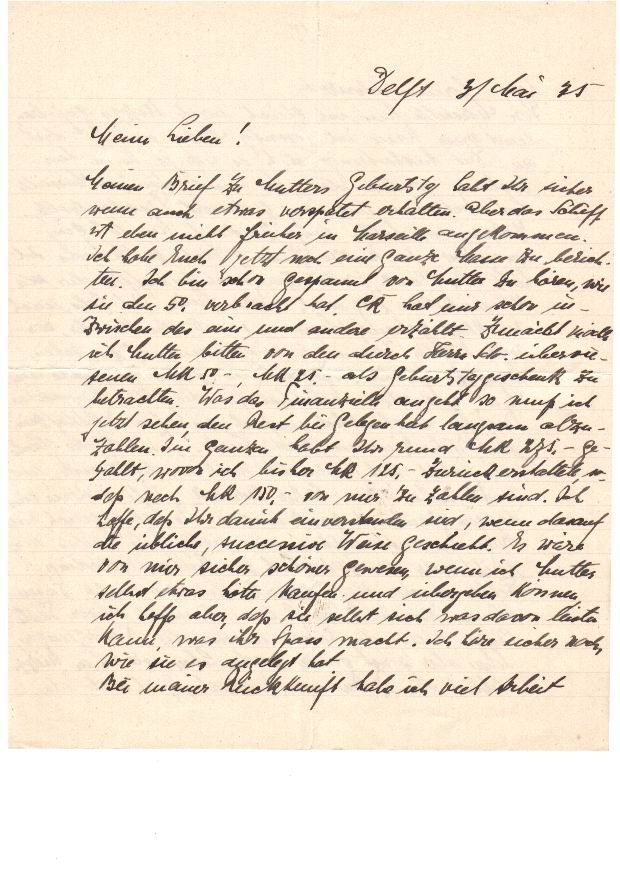
Letter home
Delft, May 1935
„Meine Lieben!“
A handwritten letter to his family years before the war — the ordinary life the later letters travel back toward.
Source: Guggenheim family archive, the suitcase
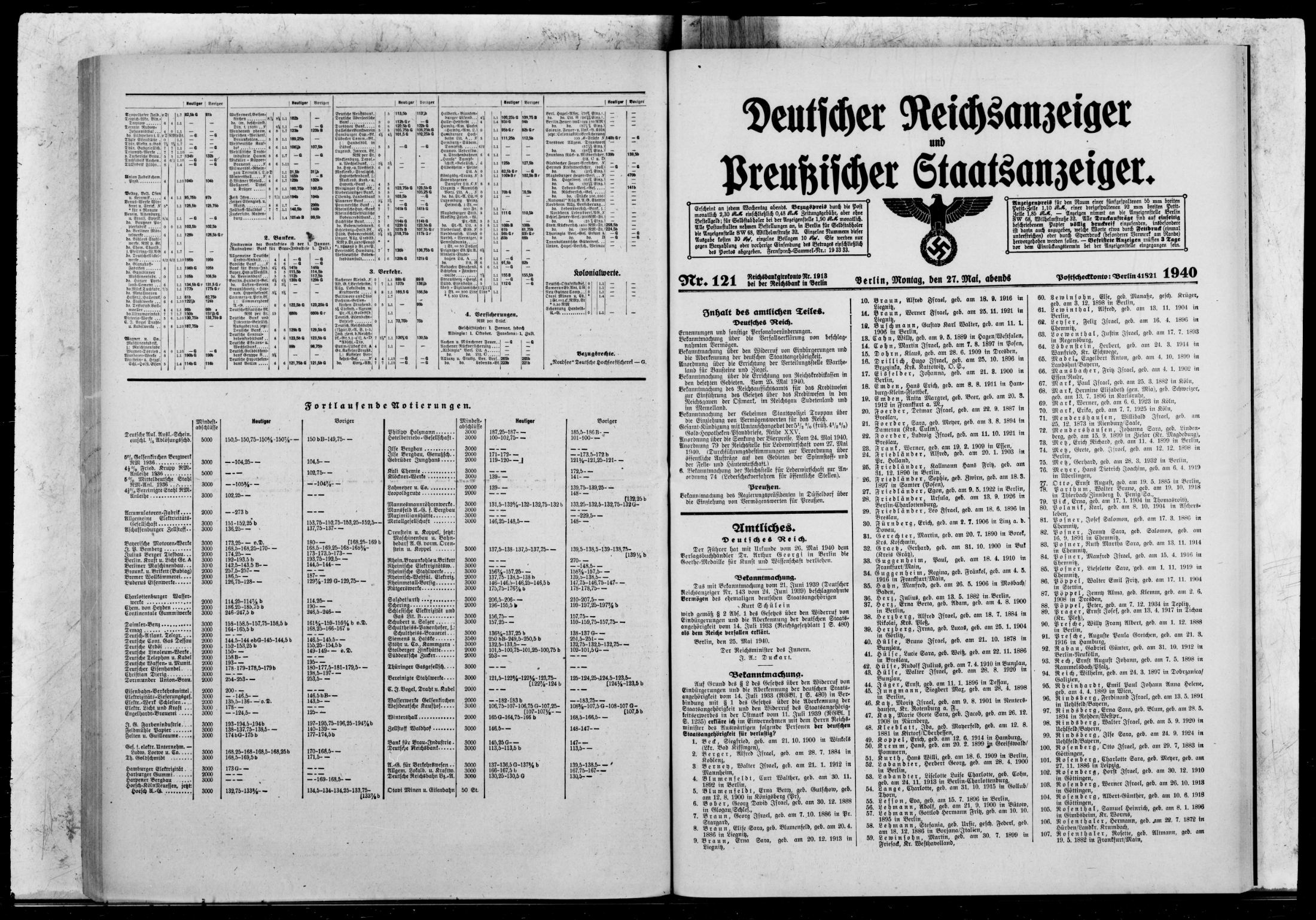
Reichsanzeiger Nr. 121
Berlin, 27 May 1940
Bekanntmachung über den Widerruf von Einbürgerungen
The German state gazette lists those declared to have lost their citizenship. No. 33: “Guggenheim, Paul, geb. am 18. 4. 1910 in Frankfurt/Main”; No. 34, Regina, née Fränkel. From this day he was stateless.
Source: Deutscher Reichsanzeiger und Preußischer Staatsanzeiger, no. 121, 27 May 1940
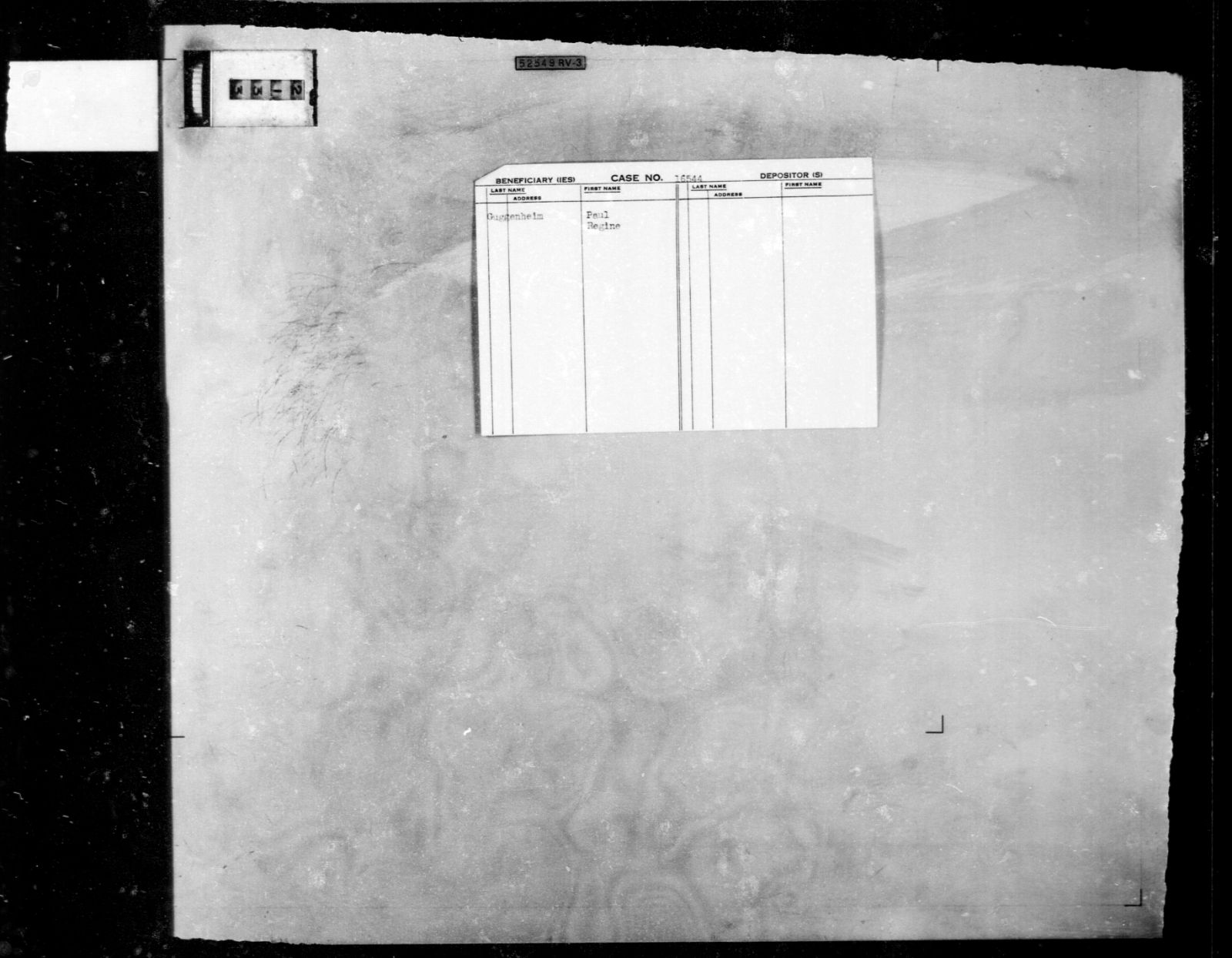
Relief case card No. 16544
Refugee aid file
A relief-agency case card, microfilmed: beneficiaries “Guggenheim — Paul, Regine”, case number 16544. In Havana his address was “c/o Joint Relief Committee, P.O.B. 2586”.
Source: Relief-agency case file, microfilm
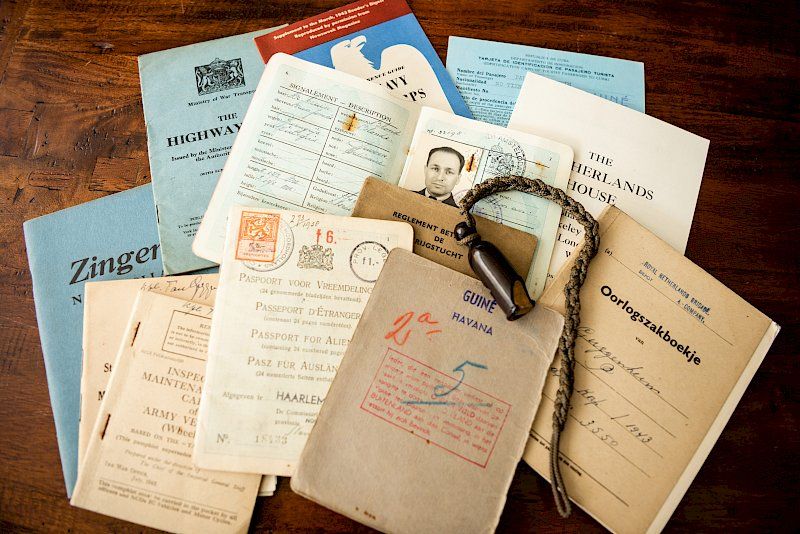
Papers from the case
Identity & service documents
What a stateless soldier carried: his alien’s passport, the army Oorlogszakboekje of the Royal Netherlands Brigade, a Cuban identity card stamped “Havana”, a British Highway Code, and a lanyard.
Source: Guggenheim family archive, the suitcase
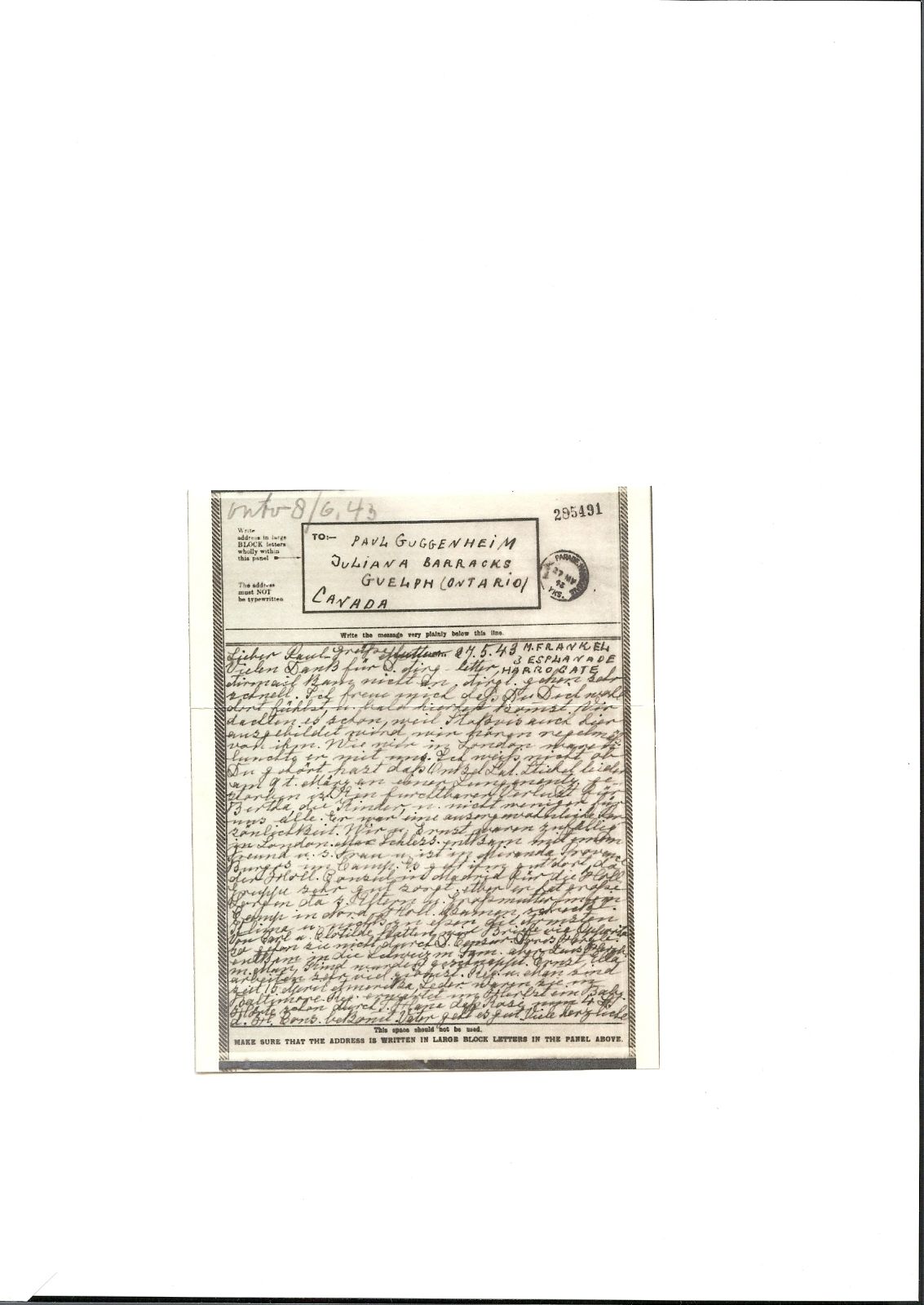
An airgraph from Harrogate
M. Fränkel to Guelph, 27 May 1943
TO: PAUL GUGGENHEIM · JULIANA BARRACKS · GUELPH (ONTARIO) CANADA
From M. Fränkel, 3 Esplanade, Harrogate — Regine’s family — to Juliana Barracks. Paul pencilled “antw. 8/6.43” at the top: answered two days before he left Canada.
Source: Guggenheim family archive, the suitcase
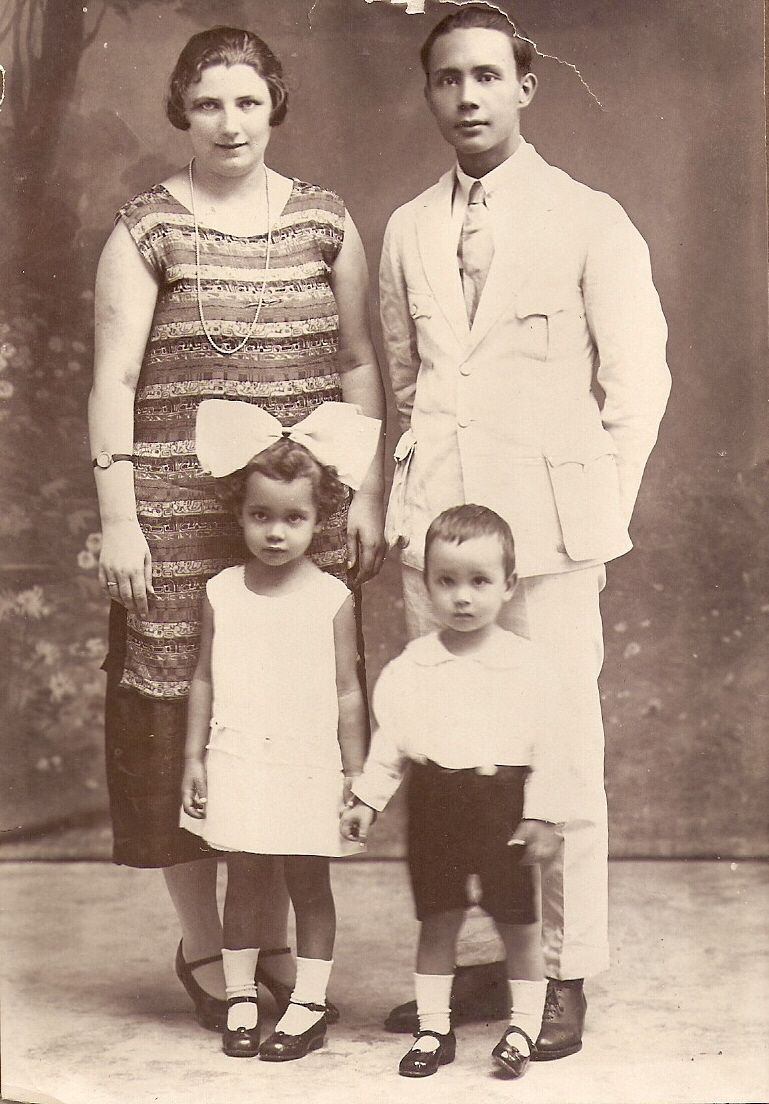
The Beiten family
Dutch East Indies, c. 1926
Hetty, in the white bow, with her little brother Tom (Anton) and their parents, in a colonial studio on Java. Tom would grow up to join the resistance and be shot by firing squad at twenty-one. The only photograph of him as a child.
Source: Family collection
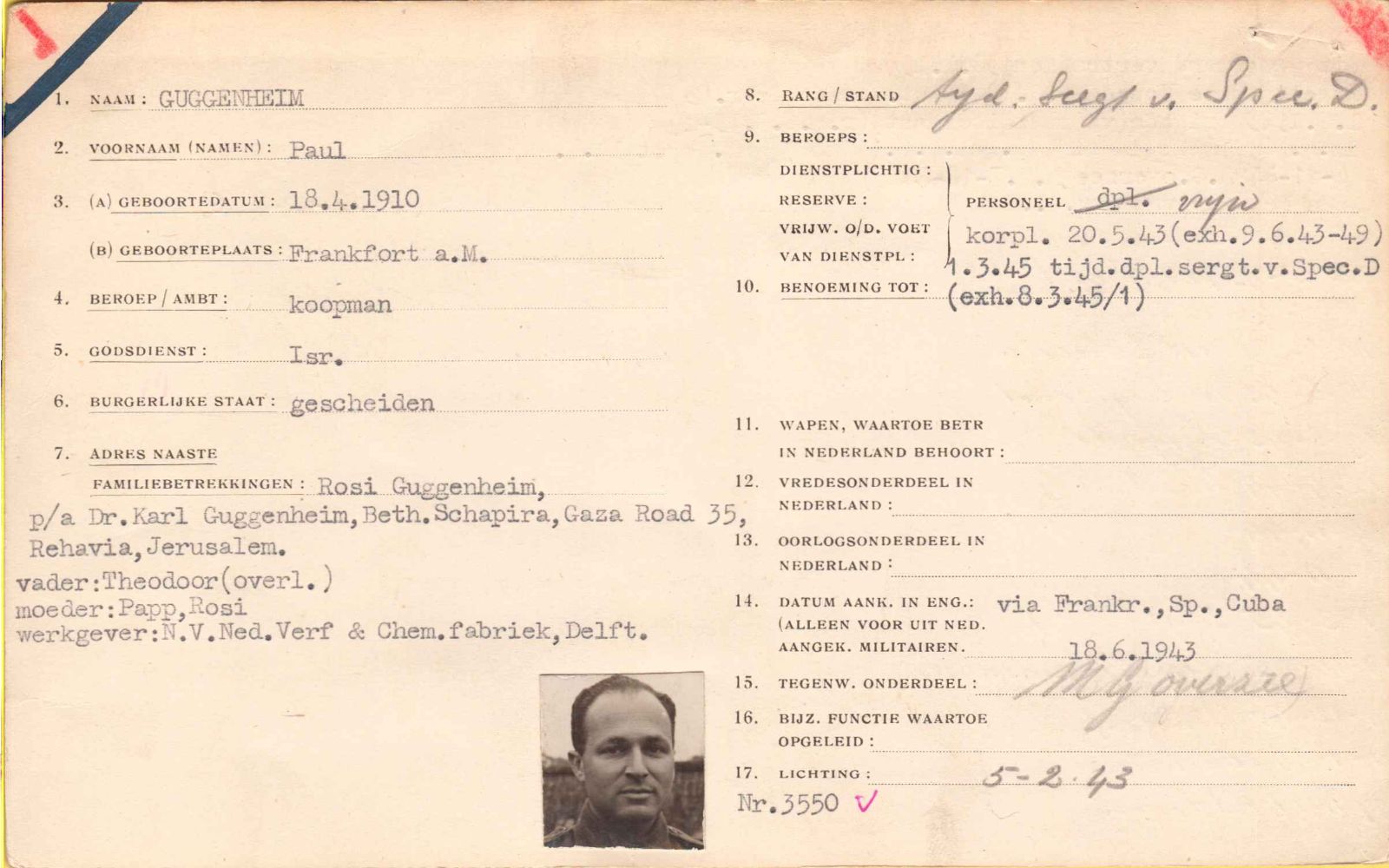
Military service card
Royal Netherlands Army, No. 3550
Datum aank. in Eng.: via Frankr., Sp., Cuba · 18.6.1943
Born Frankfurt, 18 April 1910; merchant; Isr.; divorced. Next of kin: Rosi Guggenheim, care of Dr Karl Guggenheim, Jerusalem. Corporal 20 May 1943, temporary sergeant 1 March 1945.
Source: Guggenheim family archive, the suitcase
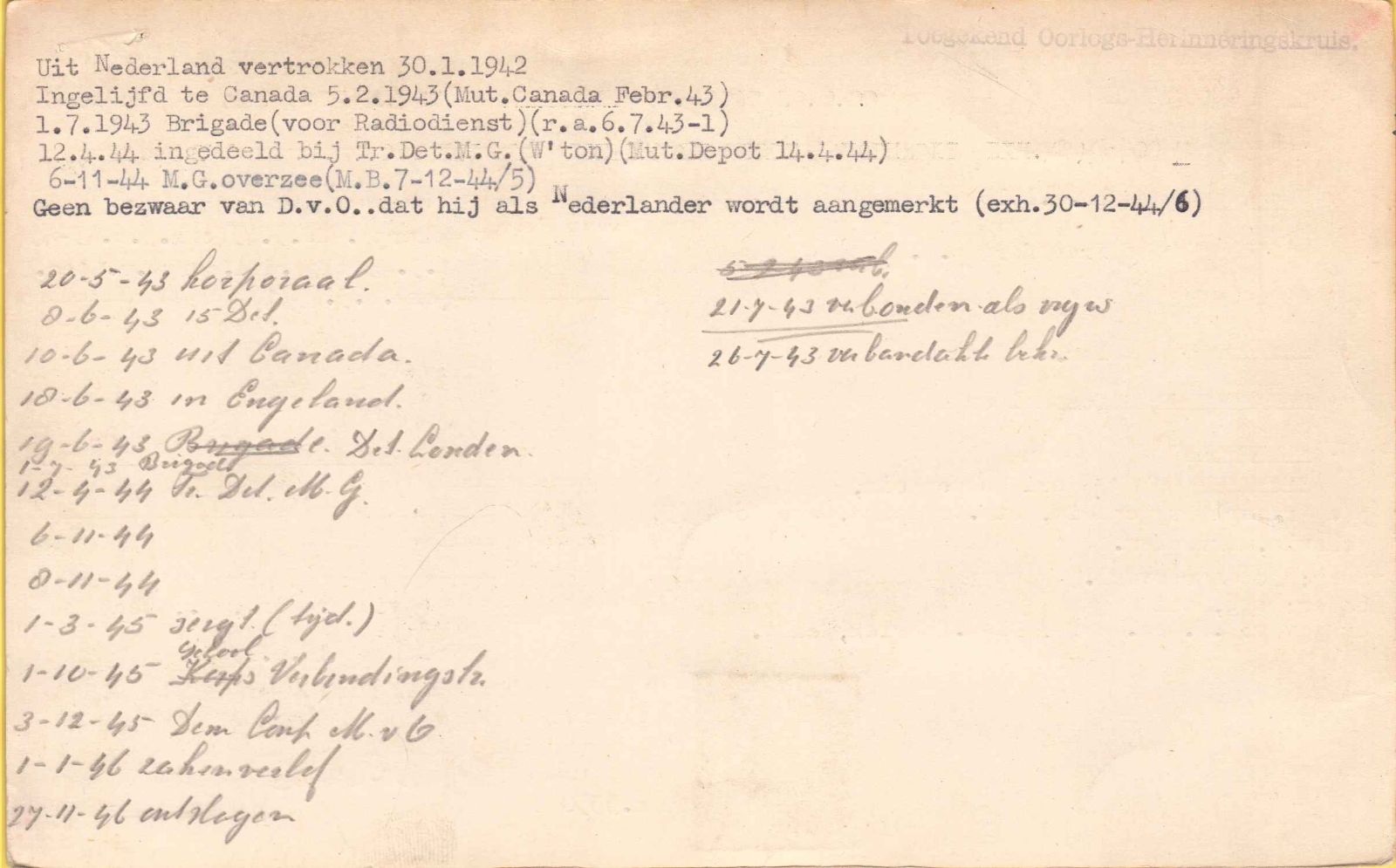
Service card, verso
Postings 1942 – 1946
„Geen bezwaar van D.v.O. dat hij als Nederlander wordt aangemerkt“ (30-12-44)
Left the Netherlands 30.1.1942; enlisted in Canada 5.2.1943; in England 18.6.1943; Military Government detachment, Wolverhampton, April 1944; overseas 6.11.1944; discharged 27.11.1946. And, typed in heavier ink: no objection to his being regarded as a Dutchman.
Source: Guggenheim family archive, the suitcase
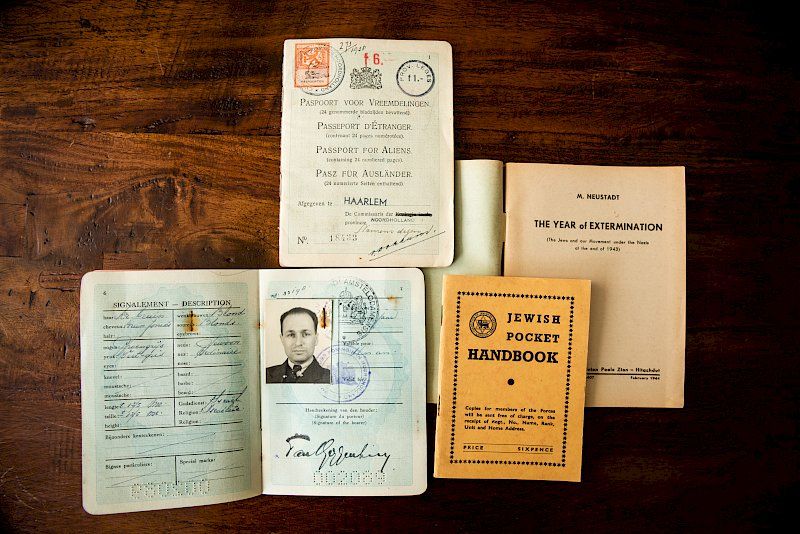
Passport for Aliens
Haarlem, Netherlands
PASPOORT VOOR VREEMDELINGEN · PASZ FÜR AUSLÄNDER
His alien’s passport, issued at Haarlem — not a citizen’s — kept with a Jewish Pocket Handbook for the forces and M. Neustadt’s “The Year of Extermination”, February 1944.
Source: Guggenheim family archive, the suitcase
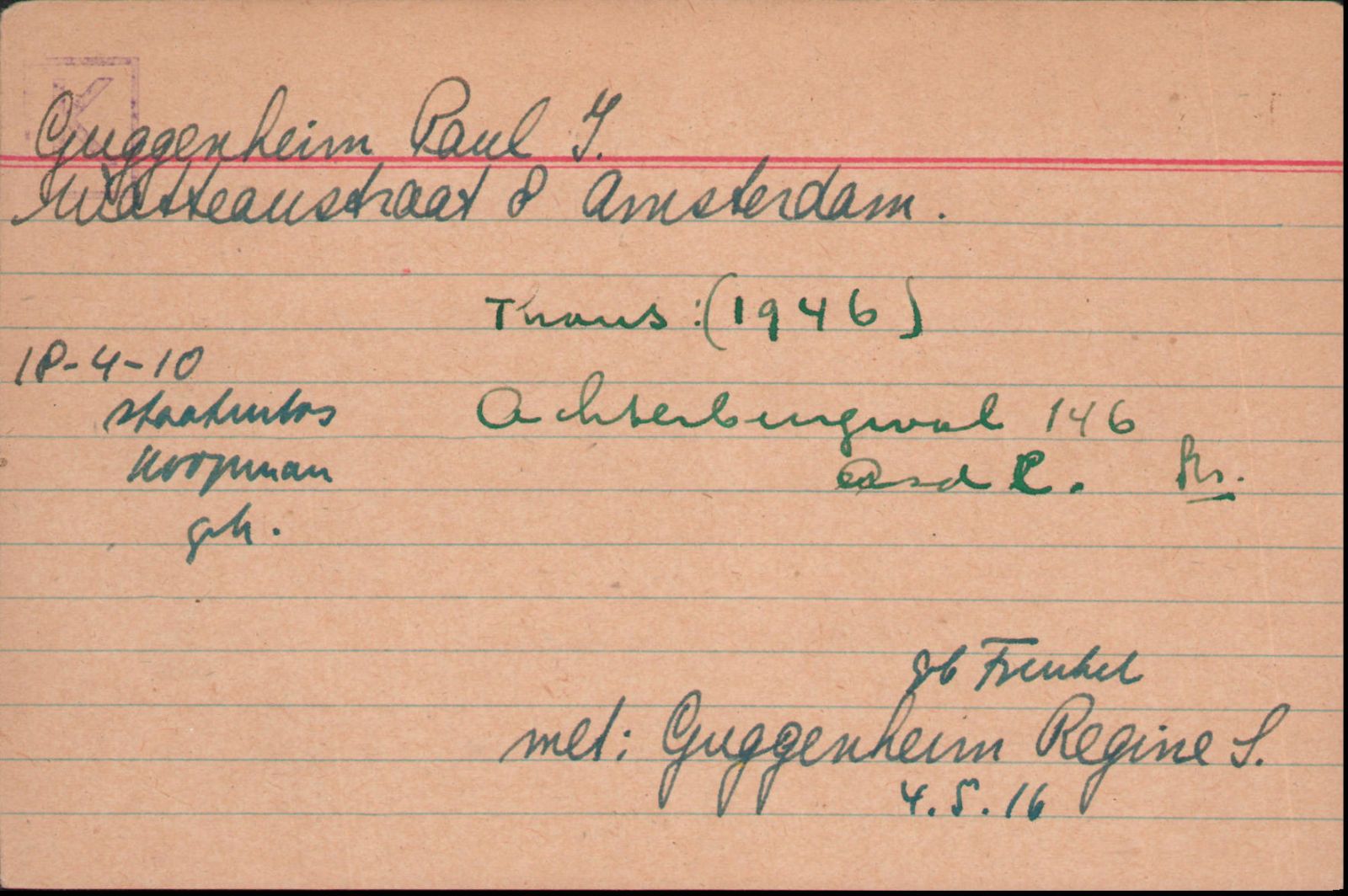
Amsterdam registration card
Arolsen Archives · Doc 130299430
Guggenheim Paul I. · 18-4-10 · staatenlos · koopman
A municipal card for Paul and Regine: born 18 April 1910, stateless, merchant. A later hand adds “Trans: (1946)” and Achterburgwal 146 — the address of Butonia, the button firm he went back to after the war.
Source: Arolsen Archives, doc. 130299430
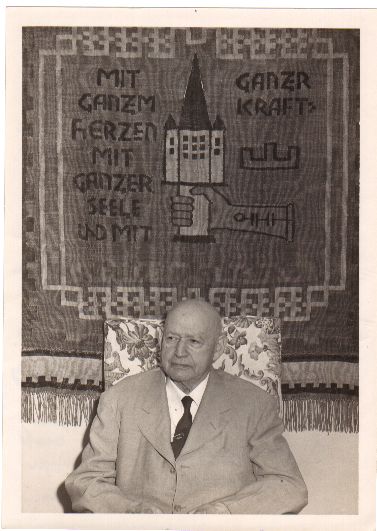
“Mit ganzem Herzen”
Family photograph
Mit ganzem Herzen, mit ganzer Seele und mit ganzer Kraft
The Guggenheim arms worked into a tapestry — a tower and a hand holding a key, ringed by words from the Shema — with a family elder seated beneath it.
Source: Family collection
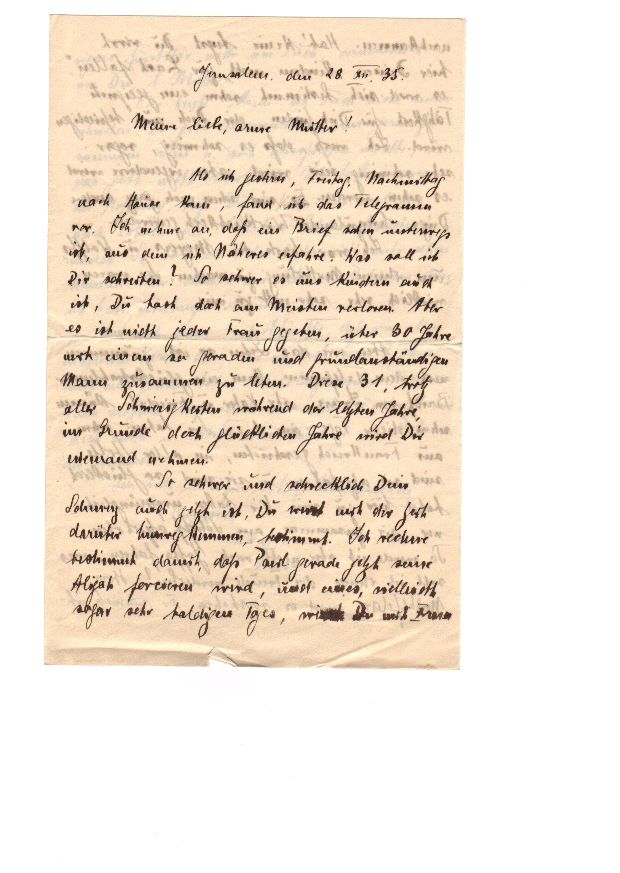
“Meine liebe, arme Mutter!”
Jerusalem, 28 December 1935
„So schwer es uns Kindern auch ist, Du hast doch am meisten verloren.“
Written to Rosi after the death of her husband, Theodor, following thirty-one years of marriage. Signed “E.” — probably Paul’s sister Erna — it tells her she will not be a burden in Palestine, and that Paul will surely make his own aliyah soon.
Source: Guggenheim family archive, the suitcase
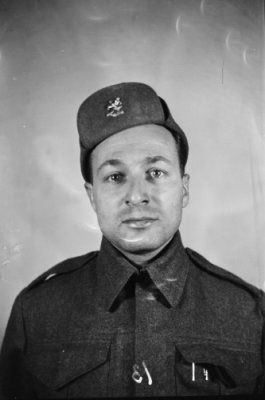
Paul in uniform
c. 1943
Paul in battledress, the Brigade’s lion on his cap.
Source: Family collection
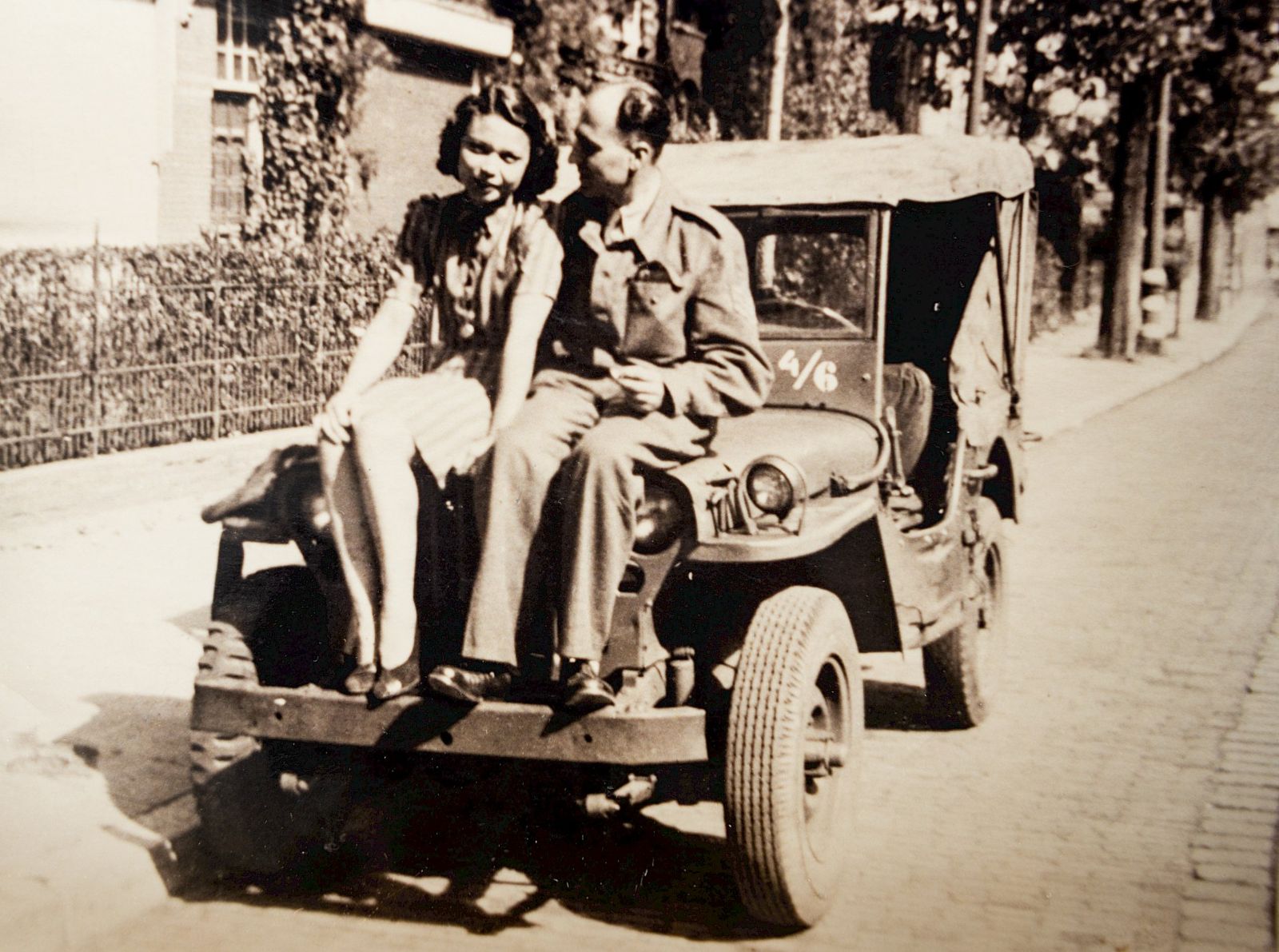
Hetty and Paul
After the war
Paul, still in battledress, with Hetty on the bonnet of an army jeep, probably The Hague or Scheveningen, summer 1945 — the earliest photograph of them together.
Source: Family collection
The journey
- Amsterdam (until 30 Jan 1942): The life that ended. A button business, a marriage, a flat, friends who would mostly not survive.
- Tiscornia, Cuba (Feb – Sep 1942): Seven months interned as an “enemy alien” — the same classification the Nazis had stripped him into.
- Havana (1942 – 1943): Released into a city he had no papers for. The divorce, Giselda, and Spanish learned in the street.
- Guelph, Ontario (1943): Accepted into the Dutch army in exile. Airgraphs flown across the Atlantic to the barracks.
- England (1943 – 1945): Wrottesley Park, Ipswich, Catterick. Sugar-beet details, courses, and requests for naturalisation, refused.
- Amsterdam (from 1945): Home, to a city emptied of the people in these letters. He was finally made Dutch.
Follow the full route on the interactive globe: seventeen stops, from Amsterdam to Amsterdam
Forthcoming: The Long Way Home
A book built from this correspondence — roughly one hundred and eighty letters written to and from a stateless man between Amsterdam, Havana, Canada and England.
About the archive
The letters survived in a single suitcase, kept by the family and catalogued letter by letter. Nothing here is reconstructed: every line on this page is transcribed from a document that exists.
Paul Guggenheim died a Dutchman. It took the war, an ocean and four years of paperwork.
{{ t.soonP }}
{{ lb.original }}
{{ lb.caption }}